
Tax Matters and Current IRS Guidance: A Practical Check-In for Florida Small Businesses

Updated: 3 days ago

IRS Guidance Starts With the Records
Tax records are foundational for Florida small businesses. They help show what your business earned, what it spent, what it owns, and how reported amounts were determined.
That sounds straightforward. In practice, it is one of the most challenging responsibilities for a Florida business owner already managing customers, employees, vendors, cash flow, and daily operations. Receipts land in email. Invoices sit in cloud folders. Bank transactions need explanation. Then tax season arrives, and everyone asks the same question: “Where did that document go?”
The IRS does not generally require one specific bookkeeping system. Its guidance states that businesses may use a system suited to their operations, provided it clearly shows income and expenses. The system may be digital, manual, or software-based. Consistency and completeness matter most.
What Florida Business Owners Should Review
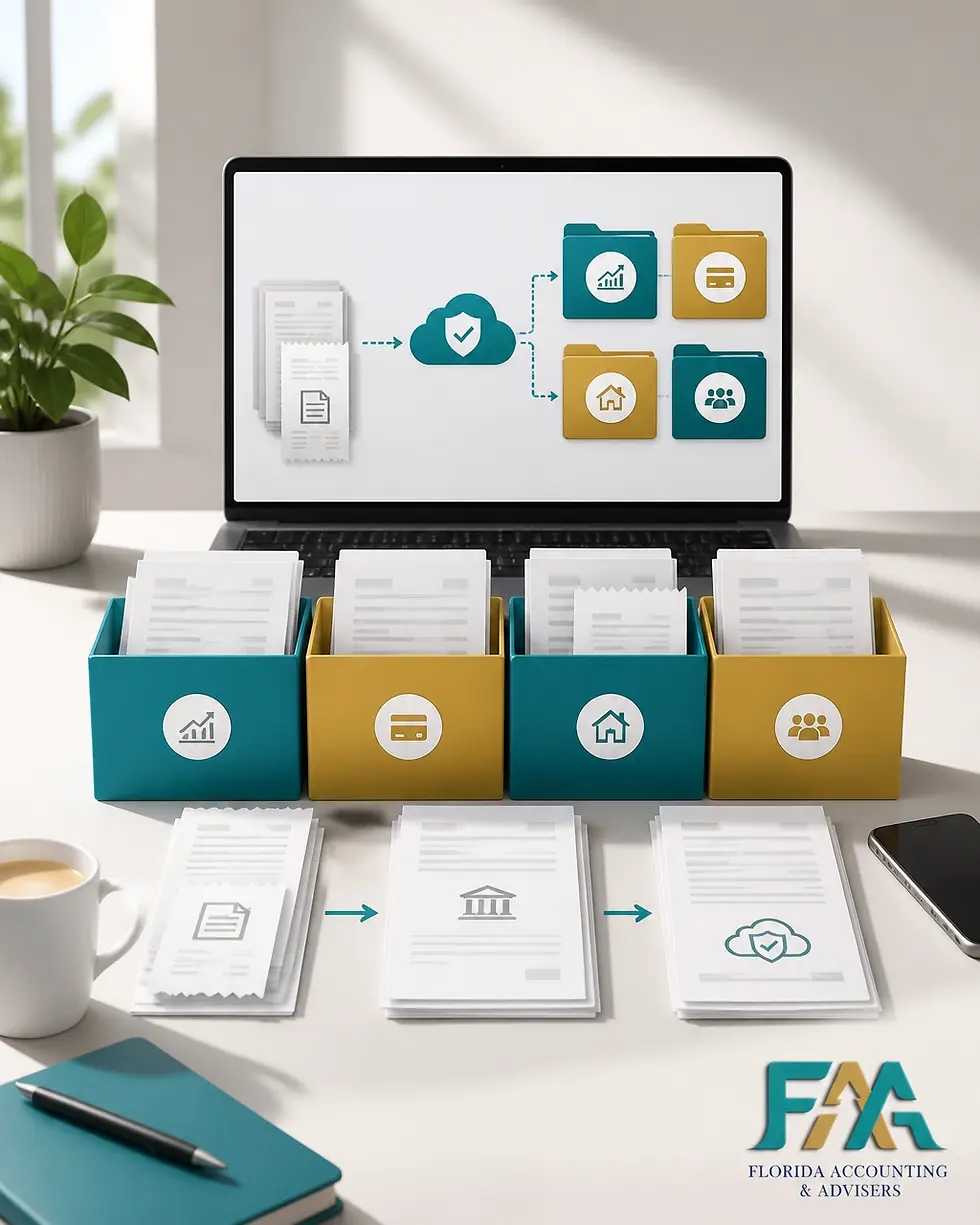
A practical year-round check-in includes four areas:
Income: Review sales records, invoices, deposits, payment-platform reports, and other business receipts.
Expenses: Keep invoices, receipts, account statements, proof of payment, and notes explaining the business purpose.
Assets: Maintain purchase records and documentation for property or equipment used by the business.
Payroll: Retain wage, withholding, tax payment, and employment tax records when your Florida business has employees.
The IRS explains that supporting documents should help substantiate entries, deductions, and other statements reported on a return. Record retention depends on the document and the circumstances. The IRS also states that employment tax records should generally be kept for at least four years.
For additional detail, review the IRS resources on what records businesses should keep and how long records should be retained. Because rules and interpretations can change, confirm current requirements with a licensed tax professional.
Make Tax Season Less Disruptive
Florida owners often focus on revenue, payroll, sales, and growth while postponing documentation. That delay can turn a manageable process into a last-minute scramble: more stressful than a full week of back-to-back client calls.
A better approach is to create a recurring process:
Reconcile business bank and credit card accounts.
Categorize transactions while details are fresh.
Attach receipts and invoices to the related transactions.
Separate business and personal activity.
Review unusual items, large purchases, and owner transactions.
Keep records in a secure, accessible location.

This process does not replace professional tax advice. It gives your Florida business a clearer foundation for discussions with the professionals responsible for reviewing and preparing your filings.
Why Organized Records Support Tax Readiness
Organized records help Florida business owners prepare for tax season by making income, expenses, payroll activity, and asset purchases easier to verify. When records are current and accessible, it becomes easier to review transactions, respond to questions, and support amounts reported on tax filings.
The IRS generally expects businesses to maintain records that clearly support income, deductions, credits, and other items reported on a return. Good recordkeeping can also reduce delays, limit confusion, and make year-end tax preparation more efficient.
[Image: Year-round tax readiness system for a Florida small business with organized records and recurring reviews]
_____________________________
This article provides general information, not individualized tax or legal advice. IRS guidance may change. Confirm current rules, filing requirements, and record-retention needs with a licensed tax professional familiar with your Florida business and entity type.
Warmly,
Roxana
36+ years of experience in bookkeeping and accounting
website: fl-accounting.com

Comments